Key Messages
- Borrower success in Atlanta reflects the city’s entrepreneurial energy, but also exists in spite of persistent challenges of accessing capital.
- Entrepreneurs and developers can strengthen their opportunities for financing by building relationships, demonstrating community impact, and preparing for both growth and risk.
- Momentus Capital provides flexible financing and ongoing partnership, combining lending products, investments, and advisory support to help borrowers expand businesses, create housing and social services, and strengthen local economies.
Celebrating Entrepreneurship & Growth in Atlanta
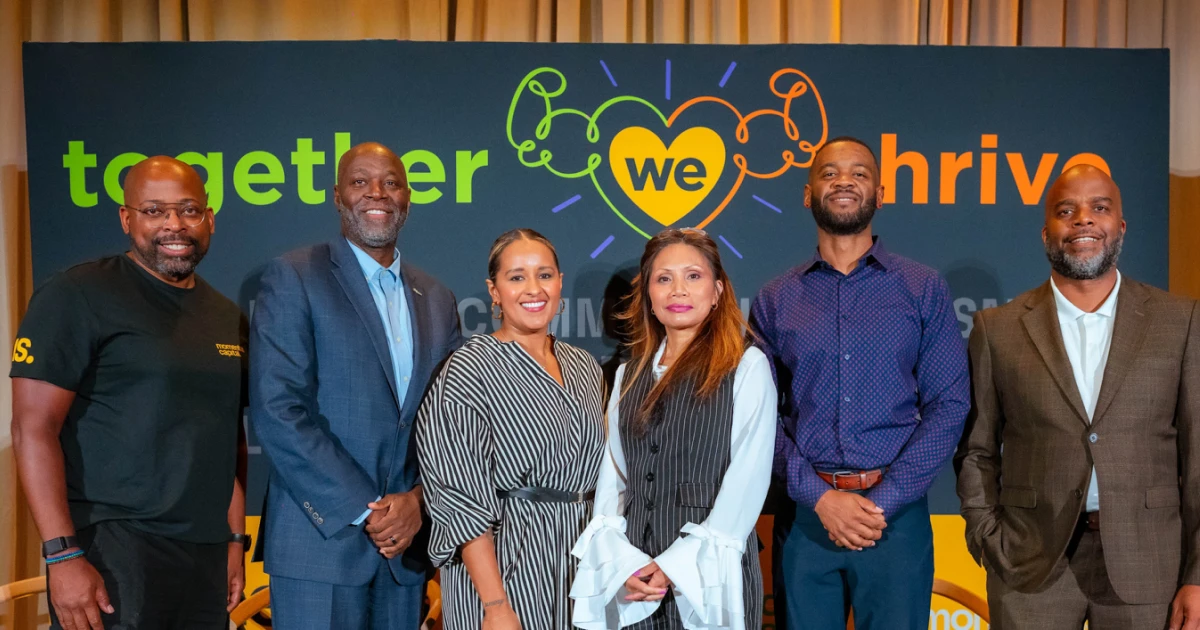
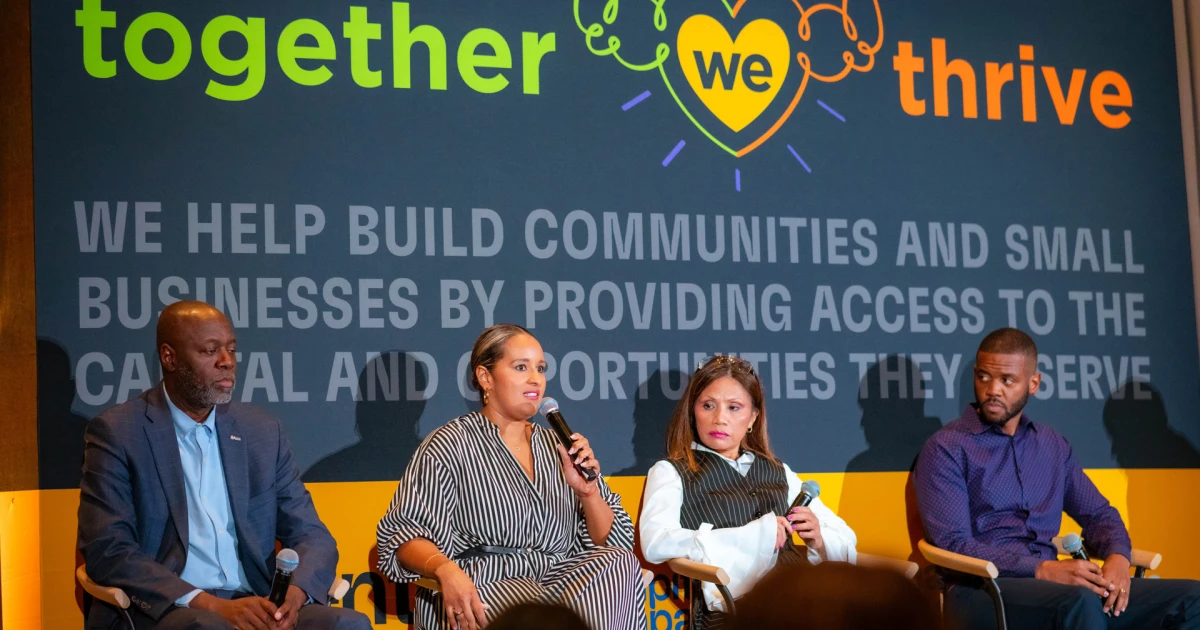
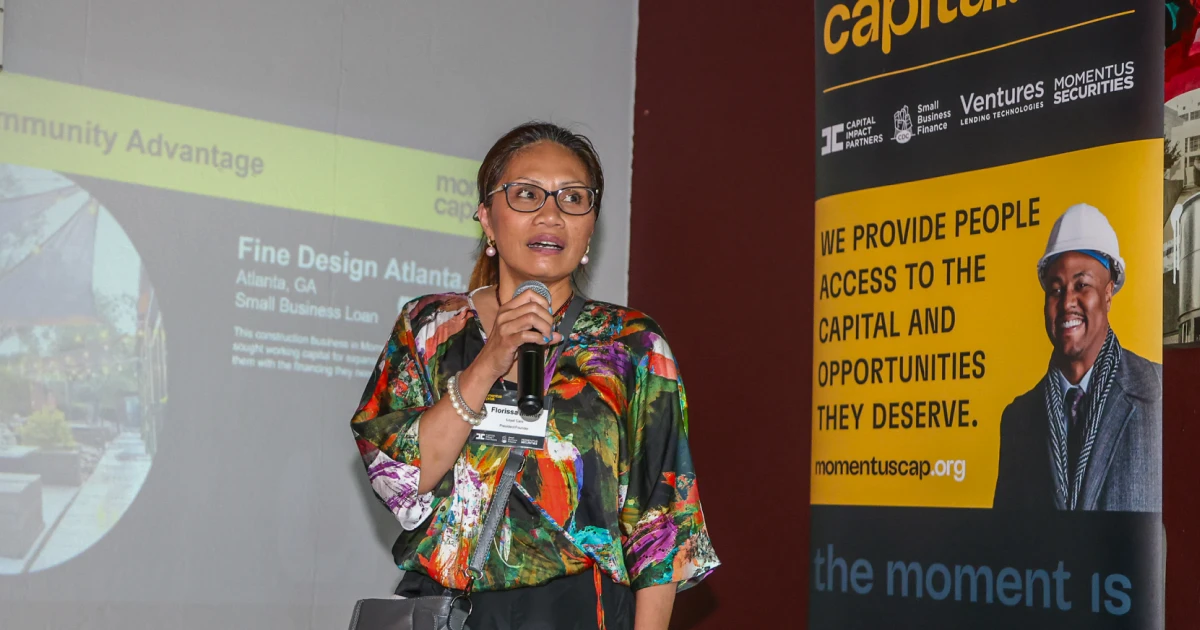
In September 2025, I joined my colleagues from across Momentus Capital in Atlanta, Georgia, for our annual all-staff meeting to highlight the impact of our borrowers and explore priorities for the year ahead. As part of the program, I had the privilege of moderating a panel where four entrepreneurs shared their experiences building local businesses and serving their communities, and reflected on how the Momentus Capital branded family of organizations has supported their growth.
The panel featured:
- Leonard Adams, Founder and CEO, Quest Community Development Corporation
- Lundyn Carter, CEO and Co-Founder, Laine London
- Florissa Maher, Founder, Loyal Care, LLC
- Majesty Gayle, Co-Founder, Push Ministry
Together, they underscored how Momentus Capital’s holistic and streamlined approach, integrating lending products, investments, and tailored support, creates a comprehensive pathway for entrepreneurs, developers, community-based organizations, and partner lenders. By connecting these stakeholders to capital and resources at every stage of their growth, Momentus Capital ensures that financing reaches projects that deliver measurable community impact. This approach reflects the annual meeting’s 2025 theme, Together We Thrive, highlighting the collective progress made possible when capital and partnerships align.
We invite you to read the accompanying transcript of our panel discussion.
Please note that this transcript has been amended for clarity from the original audio.
Tommy Lester, Atlanta Market Lead, Momentus Capital:
Welcome to Atlanta. I just want to say thank you for coming to Atlanta. We have been here a couple of years now. I appreciate the effort. As an Atlantan, it is really important for me to see the resources come.
So this team being willing, first of all, to bring the resources, to do the lending, and everything else, but then also to come back and have our annual meeting here in Atlanta, I am appreciative of you. I am appreciative of you. Thank you so much for that.
Instead of me doing the introductions for everybody, I am going to allow our panelists to introduce themselves. If you can maybe tell us a little bit about what you do, how you got here, and then maybe what you do to serve the community. Leonard, I am going to start with you.
Leonard Adams, Founder and CEO, Quest Community Development:
Good morning, everyone. Good morning.
I am Leonard Adams. I am the founder and CEO of Quest Community Development Corporation, a 24-year-old nonprofit right here on the Westside, walking distance from where we are.
So tonight, if you just happen to walk the community, you will see our work over the last 24 years in this community.
Quest cut its teeth in serving the unhoused. Our portfolio today is mostly supportive housing. Over the last three years, we have been concentrating on affordable housing and blending in supportive housing.
In July, we closed on $110 million of resources, thanks to Momentus, to help us bring on another 389 units. I will talk a little more about them. You have a card on the table if you want to see those. Thank you.
Tommy Lester
Quickly, Leonard, can you tell a little bit about your story, about how you got to Quest?
Leonard Adams:
Believe it or not, I have been an entrepreneur since I was a little kid, but I called myself a social entrepreneur.
I started in this same community with an employment agency. People in this neighborhood used to call me Rent Man or Boss Man. I had an employment agency where I used to send temporary laborers out to the old [Georgia] Dome, United Distributors, and other warehouse or industrial-type jobs.
The individuals I used to send out were all coming from the shelter. These were homeless men and homeless women. I would pick them up at 4 or 5 in the morning, either at the shelter or off the street, take them to my warehouse, give them a shirt, and then “farm” them out to different jobs.
With that being said, it was paid day work. Work today, pay today. Many of them would work for the day, 10 hours or so, get a check, and that is when the problems hit.
The majority of them, maybe 99 percent, had some type of behavioral health issue, mental illness, or addictive disease. They would go through this spiral of getting paid by the day, using drugs that night, missing work the next day, coming down off the high, and then working every other day.
So long story short, I did that for seven years. At the same time, I was buying real estate and housing these individuals for $65 a week. To save my hours and make it sustainable, I needed to figure out how to get these individuals stable. So I decided to start a nonprofit to offer the support services alongside the housing I was already providing, and employment as well.
Tommy Lester:
Got some great stuff going on, but we will move on. So, Lundyn Carter.
Lundyn Carter, CEO and Co-Founder, Laine London:
First off, my name is Lundyn, not Laine. That is the first question I ever get. Everyone says, “Who is Laine?”
My name is Lundyn Carter. I am the co-founder and CEO of Laine London. We are the only place in the United States where you can rent a customized wedding dress and get it altered to fit you.
We are in year eight. Elizabeth and I were trying to figure out when we came on with Momentus. I think it was 2022, but in entrepreneur years that feels like a million years ago.
About 25 percent of our brides come from out of state. Our average order value – this is where people kind of pause for the finance numbers – the average wedding dress in the United States costs about $1,200 to purchase. Our average order value is $2,700. That is the first math people do in their heads.
We have been really fortunate to sustain the business for eight years, and we were profitable in year two. As we have grown, some years are stronger and some are harder, but overall we have been able to take the business to the next level. A huge part of that was because of Momentus.
Tommy Lester:
Thank you. We will come back to that as well. Let us go to Florissa.
Florissa Maher, Founder, Loyal Care, LLC:
Hi everyone. My name is Florissa Maher. I have a non-medical home care services business. It will be five years old in December. I am already a franchisor, and it has been very successful.
I started the business with zero dollars. I maxed out all my credit cards just to walk into business. I have five children. I had been wanting to do this forever, and I am still working hard, spending all my time to grow it.
Majesty Gayle, Co-Founder, Push Ministry:
Hello everyone. My name is Majesty Gayle. I am an emerging developer based out of Atlanta. I focus on workforce housing.
I have been in real estate for a little over 12 years now. I have done everything. I started out locating development opportunities for experienced developers, but then I also became a general contractor so that I could provide more value in working on those projects.
So when I was able to, I took my own way and founded Push Ministry, a nonprofit community housing development organization. Right now, we build and rehab multifamily housing for the community.
Starting a Business in Atlanta: Pros & Cons for Entrepreneurs
Tommy Lester:
Perfect, thank you. So, Lundyn and Florissa, let me ask this question specifically for you. What makes Atlanta a good city to launch a business, and how do you think Atlanta could better support businesses, whether that means capital, infrastructure, technical assistance, or policy?
Lundyn Carter:
I have been in Atlanta since 2010. Before this, I oversaw corporate programs at Cox Communications.
I came into entrepreneurship really on a whim. I went to Emory for grad school, took an entrepreneurship class, and kind of fell into it.
Between my former life in corporate and then in entrepreneurship, I was able to see the potential of Atlanta. In corporate America, it looks one way, but as an entrepreneur, it is all about finding product-market fit. You are able to do that so well in Atlanta because there are so many different segments of the market that reflect the entire United States.
For me, it was being able to leverage that and show early on that this was not just something that would work for Atlanta, it would work for other places too.
There are so many different types of people in Atlanta, and that kept us here. Over the years, we have looked at different expansion plans. As I mentioned before, about 25 percent of our brides come from out of state. Atlanta is one of those places people want to come to.
Instead of quickly expanding our supply chain and opening stores across the country, we realized people were literally coming here to find us. So we focused on expanding here, adding partners, and growing in a city where people already wanted to come.
Atlanta is a warm, resilient place. Over the decades, we have seen that, and being part of it has been monumental for us.
Access to Financing for Entrepreneurs in Atlanta: The Importance of Networking
Tommy Lester:
I am going to switch to another question. It is about access to capital. Most businesses starting up have trouble accessing capital. That is one of the biggest challenges.
Florissa, let me start with you. Tell us about how you got started with your business, how you found access to capital, and what could be better.
Florissa Maher:
When I started my company, it was right in the middle of the pandemic, February 14, 2020. I guess I was just bored because we could not leave the house, everything was locked down.
So I started the company with no money. I was working for a woman as her personal nurse at the time. She has since passed away. I did not know where to go for capital, so I just used my American Express card.
Two years later, I finally found support. I think it was because I kept working and networking. Networking is so important. Being around other entrepreneurs is valuable. You cannot do it alone.
At first, access to capital was not clear or advertised. I did not know what was available. I just talked to people, and eventually I found my way.
I connected with ACE and also with Momentus. That was very helpful. April from Momentus was so great through the process. I did not know what I was doing, but I kept giving her what she asked me for, and she guided me.
Tommy Lester:
Thank you. Lundyn, tell us a little about your access to capital journey, both the good and the bad.
Lundyn Carter:
As I said earlier, we are the only people in the United States doing this. When you are disrupting an industry that has been the same forever, it is hard for investors to understand. There is no comparison, no baseline. So here we were with a great idea, product market fit, and brides trusting us with their biggest day, but it still looked risky.
Timing is everything. One of my favorite quotes is, “Luck is what happens when preparation meets opportunity.” I believe that.
I started the company in 2018. Then COVID happened in 2020. There was so much happening in the world then, and it created opportunities we had not seen before.
We received almost a half a million dollars from companies like Google, Amex, Facebook, and Visa. Once we got validation from those companies, checks started rolling in. We went down a non-traditional route, and it was all about timing. That is not happening in the same way now.
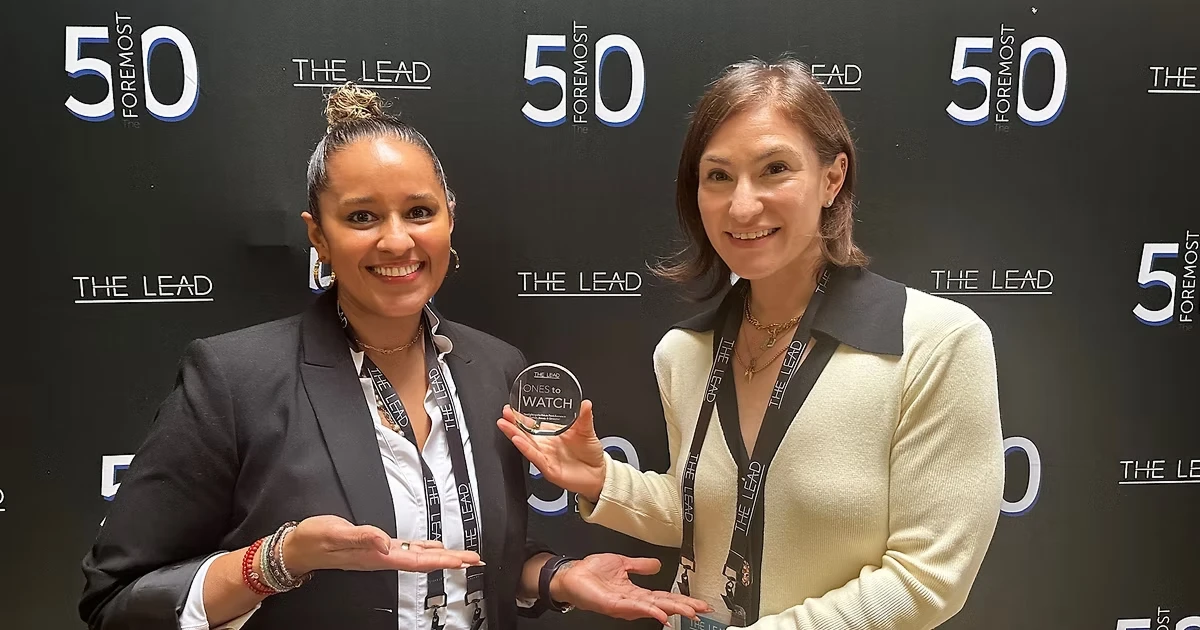
Then we worked with a company called Collab Capital to raise $1 million. There was a lot of pressure, because with $1 million the expectation was that we could grow the company tenfold, which is extremely difficult.
Almost immediately after, we needed more capital. That is when we met Elisabeth [Chasia] and Capital Impact. They helped us take everything we had learned, including the failures, and apply it to actually grow with the capital we received from them. That was 2022.
Since then, we have been cash flowing the business. It has not been easy, but we have learned lessons we never would have learned if we had seven figures in the bank. Looking back, I would not trade that, because it forced us to unlock things we never would have without the challenge.
Scaling Affordable Housing in Atlanta
Tommy Lester:
I want to come back to that question and talk about Momentus and how they helped you, Lundyn, but first I want to move to Leonard. You all probably heard what Leonard said earlier, but last year, he closed on a project. There is a card on most of your tables, you can see it. The total budget was $135 million for three projects right here within a couple of miles of this exit.
So the question is about the challenges of access to capital. In fact, Leonard had the groundbreaking for that project last year at this time, right across the street at the Home Depot Backyard. I think there were probably 25 or 30 other lenders there, along with community partners.
So, Leonard, you had $135 million in the capital stack. How many people were in that stack? Tell us about your journey from starting with buying just a few houses to doing $135 million.
Leonard Adams:
Quick story. Our silver anniversary is next year, we turn 25 years old. When I think about the words “access to capital,” there are a couple of different pathways.
Early on, in this community, I was buying single-family homes. I would go get a mortgage in my name, not the company’s name. I built relationships with the local [bank] branch. But after about six years of doing that, I realized that was not the right way to access capital.
The tools I needed were not coming from the branch level. Even though I had access to the manager and thought I had a special relationship, all they wanted was for me to open up checking accounts and things like that. They did not recognize what we were really doing.
Eventually, as we made more and more money, I found that the talent on the ground could not see when a customer needed something else. They only knew what they knew. “Can you get a business credit card? Can you get a HELOC?” They did not recognize that this nonprofit was growing at scale, and they did not know how to move us to the right place.
It takes a long time to find your tribe, to find where you belong financially. Eventually we landed in the nonprofit capital side of things, but even then there was a threshold. We had to have a $5 million budget or more. Earlier on, we were not strong enough to be in that pot, but that was where we needed to be.
For the first 17 years, we never did a capital campaign. We worked only off government contracts and government grants. So when we approached philanthropy later and said, “Can you give us a grant?” they would say, “We have never heard of you. Where have you been for 17 years?”
The same thing happened with the government. They had never seen us on the radar, because we were not doing philanthropy, we were surviving on contracts.
So there are different types of access to capital. As an entrepreneur, you are nervous about debt when you first get your nonprofit going. You wonder, “Can I pay the bills with this?” That is why we had to create a social enterprise, to be able to take in some of this money.
Where that led us was to realize what it takes to do a deal. It is not just philanthropy. Philanthropy helps us go deep into affordability and housing, but the other tools are out there too: income-based housing, impact investing with small returns, things like that.
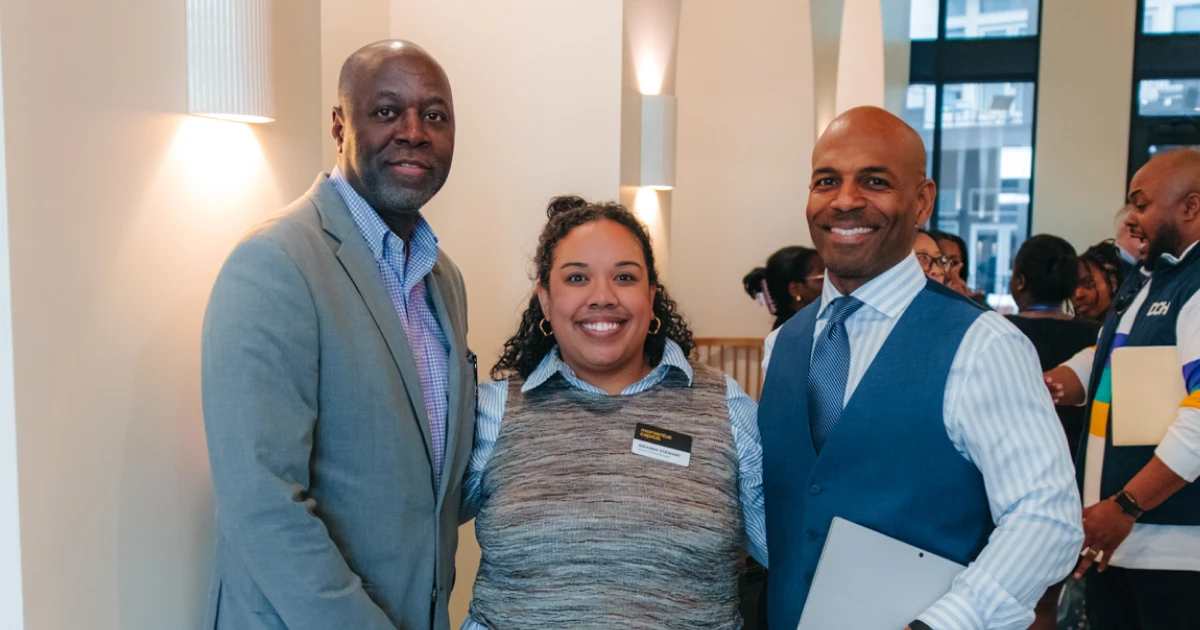
At the Home Depot Backyard we said, “Let’s showcase all three of our deals, the Westside Housing Trifecta, and invite all the funders out.” We wanted to show them everyone who was part of these deals.
It worked. People in the room were saying, “I am on that deal. I am on that deal.” And we as the borrower looked around and thought, “Wow, that is great that Momentus is talking to Enterprise, Enterprise is talking to Truist, and so on.”
But then came the hard part. The capital stack itself. Traditional banks would say, “This is nonprofit housing. The residents cannot pay rent. How will you pay us back?”
It was challenge after challenge. And yes, sometimes it felt like they looked at me and said, “Make him jump through more hoops.” But I had already learned to take no’s. I have been hearing no since I was a kid shoveling snow in Detroit. I knocked on plenty of doors before someone said, “Yes, go ahead and shovel my driveway.” I learned a long time ago how to keep coming back.
Eventually, after enough no’s, the yeses started coming, and then the money started competing to be in the deals. But there was so much red tape. One lender wanted first position, another one wanted all the control. Fees piled up because there were so many lenders and attorneys.
Still, it should be a case study. We were trying to do this without LIHTC (Low-Income Housing Tax Credit), and we actually succeeded with two of the deals. One of the projects had 17 different funding sources, layered from New Markets to CDFIs to philanthropy, corporations, government, impact investors, and even individual donors.
Now, the truth is, we are preparing to launch another $125 million campaign for our next three projects. These will include a faith-based initiative, another affordable housing development, and a single-family project with ADUs (Accessory Dwelling Unit) in the same community.
The sad piece is, even after a track record that shows we went from zero to a $7 million budget, $250 million in assets, multiple multifamily and single-family portfolios, I know when I walk into a new room I will still get treated like I am the new guy. That is what I am working on now.
Capacity Building for Housing Developers: GHD & EDI
Tommy Lester:
Leonard, I think you embody what we consider an ideal type of client or relationship here at Momentus. You are following what I call the continuum of connectivity, which means staying connected across programs.
For everyone’s context, Leonard is part of our Growing Housing Developers (GHD) program. The financing we participated in for his project was through New Markets Tax Credits, thanks to Sarina, Will, and the team.
Then when we launched the EDI last year, I was tasked with finding locations and speakers. I called Leonard, and he picked up right away. He gave us a space to meet in his office building, and he even came out and presented it to us.
Leonard, can you share why it is important, both to receive that kind of support as a GHD member, and also to give back that support to others?
Leonard Adams:
It is very important, very important.
At times it feels like you are swimming upstream by yourself. You know there are other people doing the work, Majesty for example, 12 years in, but sometimes it still feels lonely.
I remember going to a developers’ conference. I said, “I am a nonprofit developer.” The whole room laughed.
In my first three applications with Invest Atlanta, when it asked about developer fees, I put zero, zero, zero. Because I thought of myself as a service provider, just buying real estate to help people. They laughed at that too.
Eventually I looked up what developer fees actually were and realized that is part of being a developer. I became one.
So the importance of extending our space to EDI is to strengthen the ecosystem. That is what GHD is about. There are 27 of us nationwide, and we are trying to be trailblazers so that we can swim upstream and then help the next group follow.
That is why it was an honor for me when you called, Tommy, and asked if we could host. We had the ability to offer space, and we were glad to. It is hard to find affordable space in Atlanta, let alone free space. We offered it, because that is what it takes to build this ecosystem.
EDI: Helping Emerging Developers Grow Their Communities
Tommy Lester:
Majesty, I want to shift to you. I want to talk a little about your experience with the EDI Program. Can you tell us why you decided to participate, what you found valuable, and maybe some ways we could improve the program either here in Atlanta or nationally?
And EDI did turn out to be a great program. It was very eye opening. It was inspirational…
— Majesty Gayle, EDI Participant
Majesty Gayle:
Okay. Well, I sought the program out because I wanted to commit to multifamily housing and mixed-use development specifically. The program spoke to that, so I thought it would be a good fit.
And EDI did turn out to be a great program. It was very eye opening. It was inspirational, especially when we had the session at Leonard’s space. I am a nonprofit developer myself, so I get those same laughs that Leonard talked about, and it was really powerful to see someone who understood and had accomplished so much. It showed me what was possible for myself as well.
The different sessions were great. We got to meet other developers, we learned from them, and we learned from capital providers. We got a better overall understanding of how to present ourselves as developers to lenders. It helped shape everything.
We went through LIHTC, we went through New Markets, we went through the whole range of tools. Before that, I had to do research on my own, just trying to figure it out. It is not an easy space to navigate without help.
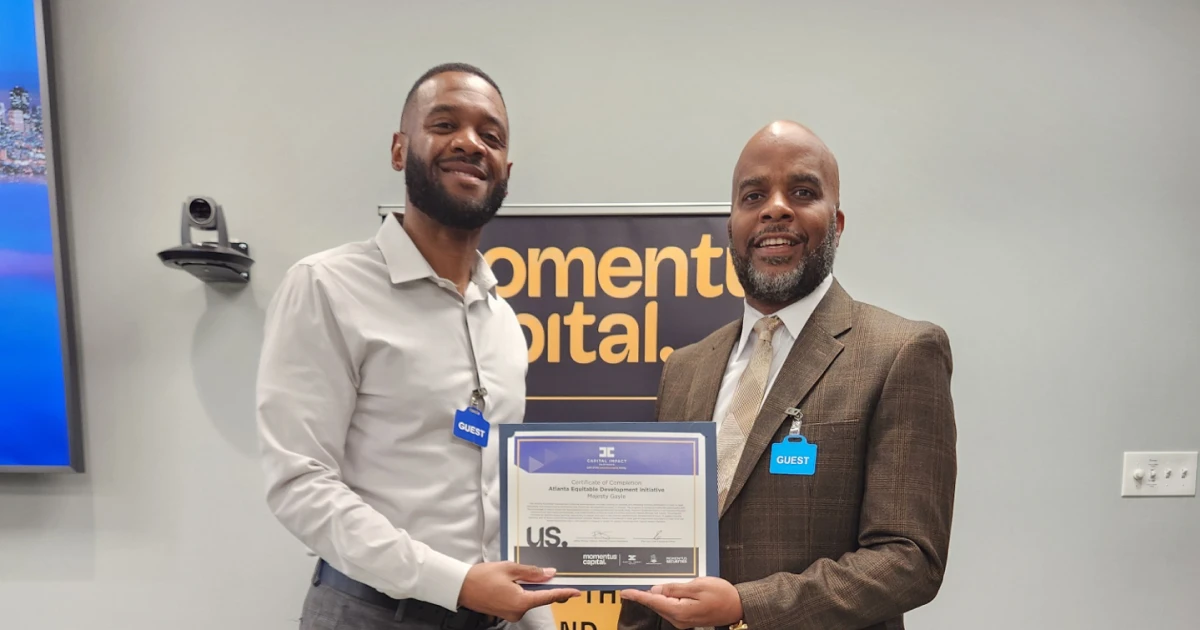
Another thing that was valuable was that the program brought us together in Atlanta. Before, we were all operating separately. We were fragmented. Now we are like a family. We do projects together, we help each other. Just a few days ago, I went on a property tour with Ramon from our cohort. That would not have happened without this program.
If I think about improvements, one thing we all want is some pathway from EDI into the Growing Housing Developers program. Honestly, we are jealous of the GHDs. We want to get there. If there was a way to try out or move up after finishing EDI, that would be great.
Closing the Predevelopment & Acquisition Funding Gap
Majesty Gayle:
Another thing is capital. Capital is always a challenge. Predevelopment funding especially. It is completely non-existent. If there was some way to get pre-development money, that would push our projects forward. Some of our cohort members are still struggling with that today. That is actually why I launched an impact fund myself through my nonprofit, because this access-to-capital issue has to stop somewhere.
In affordable housing, the risk is always seen as too high. Investors, lenders, family offices, they all look at it as risky. But somebody has to carry that risk. Too often, we as small developers are the ones who carry all of it, even though we do not always have the resources. That is a big challenge.
We have been able to keep going mostly with government contracts, but that has shifted since the beginning of this year. So right now we are adapting. We are focusing on working with accredited individual investors to fund our deals. That is what we have had to do.
Tommy Lester:
Really quickly, you mentioned launching a fund. Can you tell us a little bit more about that?
Majesty Gayle:
Yes. The fund is set up as a $100 million fund with a 10-year goal. The purpose is to raise capital to cover about 30 percent of the costs to acquire existing property.
We are doing some development, maybe about 10 percent of the fund is for that. But acquisition and rehab has proven to be the quickest way to provide housing. We can acquire a property in 60 to 90 days. It takes three years to build a new one. Right now, acquisitions are what work for us. Over the next few years, we hope to shift more into new development, but this is the fastest way to meet the need.
Momentus Capital Supports Business Growth in Atlanta
Tommy Lester:
Thank you, Majesty. Let us come back to Florissa and Lundyn, and then everybody can answer this question. I think you already touched on it, but it is really about what role Momentus has played in your business. Both of you received some funding from us. Can you tell us what was important about that support, and any other assistance you received from Momentus, and how it affected your business? Florissa, please.
Florissa Maher:
Yes, thank you. It is really important to have access to capital. Payroll has to be paid. If you do not pay employees, they stop coming to work. I did not want to be in that situation, and I did not want that trouble in my life.
I remember I was at a working event. A woman there said to me, “Why do you look so sad, Florissa? You have great clients. You are doing a great job.” And I said, “I have no money.” She said, “Let me introduce you to someone. Here is the card.” It was April [Lewis]. I emailed her, and she helped me.
It made such a difference. Before, I was getting two hours of sleep a night. After working with Momentus, I could finally rest. Now I get seven, nine, sometimes even twelve hours. It is still stressful at times, but it is much better.
It was stressful not knowing where the money would come from. I never wanted to ask my clients for early payments. That felt unprofessional. With Momentus, I had support.
Last year, my business did $1.4 million in revenue. I give April and Momentus a lot of credit for that.
— Florissa Maher, Momentus Capital Borrower
Lundyn Carter:
As Florissa said, capital is always important. But I also think not all money is good money. Not all money does what it is supposed to do.
What we appreciated about Momentus is that they asked the tough questions. They really wanted to understand our business. They gave us confidence from day one and have stayed with us through the years.
We meet with them regularly. Poor Noah, he is single and not getting married anytime soon, but he probably knows more about weddings now than anyone else here. He has sat in on all those calls, listening and supporting us.
That is what I value. That they actually listen and care.
For context, our deal was with Macy’s, Inc. and Momentus. We got the deal through Macy’s, but it has been Momentus that really came through. The gift out of that whole partnership has been Momentus.The expectations were different. Momentus showed us what a partner and an investor should be like. It has been genuine, and we truly appreciate it. That is why I am here today.
Momentus showed us what a partner and an investor should be like. It has been genuine, and we truly appreciate it.
— Lundyn Carter, Momentus Capital Borrower
Growth Horizons for Businesses in Atlanta
Tommy Lester:
Last question before we open it up to the audience. What is on the horizon for your business? What are you working on going forward, and what kind of support do you need? That support could be from us, from the city, from policy, infrastructure, or capital. Leonard, let us start with you.
Leonard Adams:
Where we are going next is launching the $125 million capital campaign later this year. We will be featured on People to People TV in October to launch it.
We are really trying to showcase that it takes multiple players to make a capital stack happen. What helps is having that first anchor. Momentus has often been that anchor for us. Because we were part of GHD, and probably because that was one of our first sources, that gave others the confidence to join in.
Someone once said, once one domino falls, others follow. That is why it is important to find that first partner who will commit. For example, a partner who says, “I will put in $5 million right out of the gate, because I know the vision, I know this organization.” That first commitment is key.
I also want to highlight something else. For the last four years, I was president of Knoxville College. It is a very old institution, and I was brought in as a non-academic leader to bring business acumen and revitalization. I had some success there.
What I noticed, though, is that many long-established institutions are not aware of organizations like Momentus and the capital and expertise they can bring. If small nonprofits like ours can benefit from CDFIs and groups like Momentus, imagine what those hundred-year-old institutions could do with the same support.
We are really trying to showcase that it takes multiple players to make a capital stack happen. What helps is having that first anchor.
— Leonard Adams Momentus Capital Borrower
Tommy Lester:
Thank you, Leonard. That is very helpful. Lundyn, what is next for you?
Lundyn Carter:
We are really focused on acquisition. And when I say acquisition, I mean two things. One, we are looking at the possibility of being acquired as a company. Two, we are also working on acquiring and revitalizing existing bridal shops.
I am sure many of you have heard the term “the great wealth transfer.” That has been very intriguing to me for several years. You can drive down the street and see so many small businesses that have shut down. Sometimes it is because there is no one to take them over. Sometimes the owners are retiring. Sometimes they do not have the knowledge or resources to modernize and run the business for today.
We have learned that sometimes being forced to slow down is not a bad thing. Growth has been slower for us because of capital, but what we learned is that slow and steady is actually sometimes better. Time is something that money cannot buy.
So for us, instead of building out new bridal shops, which are already out there, we want to take the ones that exist in communities and help keep them alive. They have been part of the community forever. They just need the right model, the right structure, and the right people.
Our goal is to identify local owners, or even staff who have been working in these shops and never thought ownership was possible for them, and bring our business model to them. That is how we want to grow.
Nothing we have done has ever been traditional. I do not think traditional growth is in our cards. But we know the right partner is out there. We know the capital will come when it is supposed to come. In the meantime, we will keep building the business ourselves.
Tommy Lester:
That is a really interesting way to think about scaling. Honestly, as a guy, I never would have thought about scaling bridal shops that way, by taking over existing ones. But it makes a lot of sense. We talk about that sometimes on our impact investing team, about how business owners can grow by taking over existing businesses. That is a great idea, and I think our team could talk to you more about that.
Florissa, what is next for you?
Florissa Maher:
For me, I always want to grow bigger and better. I always try to be better.
We have a five-star rating, and I want to keep it. I make sure my employees are paid well, and I make sure I do not charge my clients too much. I try to keep it affordable. That is one reason we have not grown too quickly, because I am careful about costs.
I really care about my clients. I care about everyone I serve. People often say to me, “I have had other agencies before, but I never even met the owner.” But with me, they meet me. I am the nurse. I am the caregiver. I am the owner. Sometimes I even do their grocery shopping.
I have a lot of energy, and I bring it to everything I do. That is probably part of why I have been successful.
This year, I became a franchisor. I launched my franchise company in March. We already have one franchisee, and that location is opening this Sunday. So hopefully we will keep expanding from here.
Tommy Lester:
Thank you, Florissa. That is wonderful to hear. And since we are talking about growth, I also want to mention that we have a Business Advisory Services team here, with Chuck, Marc, and others. They help businesses figure out how to scale. That could be a good next step for you.
Majesty, what is next for you?
Majesty Gayle:
We have several projects in the pipeline, mostly acquisitions.
We have a 60-unit property near Field and Ellwood that we are closing on around Thanksgiving. That one has been in the works for a while. We also have a 172-unit project in the Laconia area that we are working on. That one is exciting because it has amenities like a pool, a clubhouse, and other features.
Right now, the market is at an interesting point. Sellers of multifamily properties want to get out because of rising interest rates and flattening rents. That creates opportunities for us to make deals. It is kind of a perfect storm.
So we are really in acquisition mode right now. We hope interest rates come down soon, but even if they don’t, we are finding ways to make plays on properties and keep them affordable for the community.
Tommy Lester:
Thank you, Majesty. And just for everyone’s awareness, Majesty is an EDI participant, but not yet a borrower.
Now let’s open it up to questions from the audience.
Audience Q&A: Access to Capital & Capacity Building in Atlanta
Audience Question:
This question is for Florissa. This year has been very different on the socio-economic front. Since you work in home health, how are you managing your clients’ concerns and keeping business coming in?
Florissa Maher:
I do not have fears when it comes to caring for my clients. Right now, I do not take Medicaid or Medicare, I only take private pay clients. There are plenty of clients out there.
Georgia is saturated with companies like mine, but my company is called Loyal Care for a reason. I am very loyal to my clients.
I have been a nurse since I was 19. That means about 40 years. My oldest son is 40, so I know I have been a nurse that long. I turned 60 this year.
I just keep going. I do my best. I always tell everyone, be positive, keep moving forward, and do not let stress or fear take over you. Take ownership. Stay proactive. That is what I believe in.
Audience Question:
Thank you all, this has been very insightful. My question is for Leonard. You mentioned earlier that you decided to structure one of your projects without LIHTC. Why did you make that decision? And is that something you are doing across your portfolio, or was it just that project?
Leonard Adams:
In Georgia, if you want to be a credentialed LIHTC developer, you have to have five qualified deals. Even though we have been around 24 years, Quest has only developed three LIHTC deals. So we need two more before we can do them on our own.
That means either we partner with another LIHTC developer, which usually means splitting fees, sometimes even giving up more than half, or we try to do deals without it.
That was one reason. Another is competition. The city of Atlanta gets only about three LIHTC allocations each year. For the whole state, maybe 36. Competing for those is tough.
So we tried to figure out a way to build a capital stack without LIHTC. That way, we do not have to compete for those limited slots. But LIHTC is still a good program, and we will keep targeting it.
Audience Question:
This is our favorite part of the meeting, hearing from you all. My question is, how can we make sure you hear about opportunities from us when you are so busy? For example, I work on SBA 504 financing, and I wonder how to get you more information when you are running your businesses and developments every day.
Lundyn Carter:
That is a great question. Our strategy is really two-pronged.
First, many of the small business owners we interact with are still working with pen and paper. They do not know Excel. Some do not even own their property. They do not know about SBA loans. Some barely know how to use a laptop or an iPhone. So yes, bringing opportunities like SBA financing to them is important.
Second, we are building what we call “Bridal as a Service.” It is a play on SaaS, software as a service. We are licensing what we do in different tiered packages depending on the needs of the shop. Most of them need help with marketing. Others need to put their inventory to work more effectively.
On average, bridal shops work with about five different designers. They spend hundreds of thousands, even millions, each year on inventory. It is not necessary. We work with two designers in Ukraine. We co-design with them. That has opened a lot of opportunities.
So it is not about having all the designers. It is about having the right ones. We can activate assets that already exist in the U.S. and make them into dresses brides want to wear on their wedding day.
We also looked at other industries. Dental service organizations like Aspen Dental buy small practices and then modernize them. That is the model we are following.
So yes, we would love to connect with your team. There is a lot of money on the table that is not being used, simply because people do not know about it.
Leonard Adams:
I want to add something. Sometimes it is just hard for us as leaders to know who to connect with. Who do we call? Is it the COO? Is it the strategist? Is it someone in real estate? Someone in finance? We do not always know.
One of the biggest challenges for us is talent. As a nonprofit, it is hard to pay competitive wages. Sometimes we have to stretch our resources, even to hire licensed professionals.
Maybe Business Advisory Services could be structured so that instead of helping us project by project, you embed with one organization for a year at a time. Spend the whole year with Quest, then the next year with Majesty, and so on. Look across all our needs and help us map resources. That would make a big difference.
Tommy Lester:
That is a great suggestion. Thank you for that.
Please join me in giving our panelists a round of applause.